
Stories · worlds · simulation
Essays & field notes
Essays on story generators, transmedia worlds, world models and simulation: how they work, where they break, and what they could become.
Essays
Vibe development vs vibe coding: building real systems with AI
Vibe coding on Lovable or Bolt gets you a working demo. Vibe development uses AI agents to architect infrastructure, SQL and backends that survive production.
29 Oct 2026
Story generatorsFrom interactive film to generative universes: what world models change
How world models could move storytelling from fixed clips and branches to responsive scenes—and what latency, coherence, player agency and authorship still demand.
21 Oct 2026
Story generatorsA field guide to Story Generators: why interactive stories start with text
Story Generators turn an authored world into a live, responsive story. Text is the medium where that new form of interactive entertainment can be built and tested today.
20 Oct 2026
Transmedia & toolsClassical 2D mechanics: the feel layer under generated worlds
Jump arcs, movement, tile grids, collision, fixed timesteps and cameras: the hand-tuned rules that still decide how a generated world feels to move through, and how they anchor generated content.
17 Oct 2026
Story generatorsGenerative audio for story worlds: adaptive scores, sound effects and synthetic voices
From iMUSE to text-to-speech characters: how generated sound gives a story world its voice, when to generate live versus in advance, and the consent questions to settle first.
16 Oct 2026
World models & simulationsDesigning 3D worlds for discovery: from landmarks to world models
What makes a simulated world worth exploring, and how procedural structure, AI agents and world models can make space invite curiosity rather than just provide scale.
15 Oct 2026
Dispatches
All dispatches →
Meta releases Muse Ember, a small model built for agent subtasks
Meta launched Muse Ember on 9 November 2026: a low-cost model with a 1M-token context, priced at $0.10 per million input tokens, for high-volume agent subtasks.
12 Nov 2026 · Meta AI Research blog
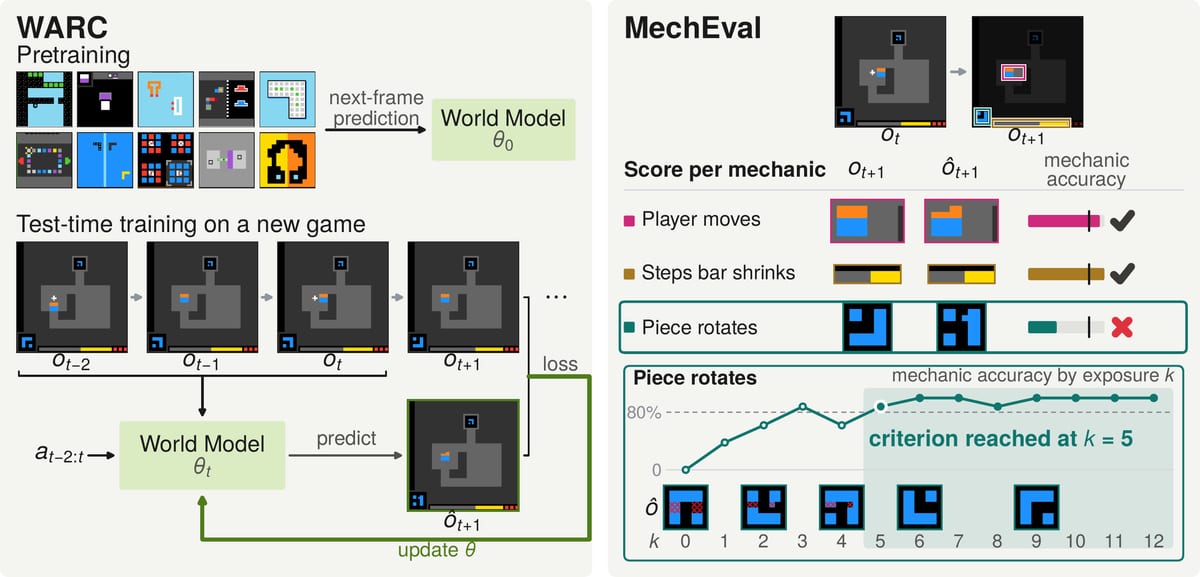
WARC world model learns unseen ARC-AGI-3 game rules while it plays
WARC, a 35M-parameter world model, keeps training during play and learns most rules of unseen ARC-AGI-3 games. Code and weights are out under CC0.
10 Nov 2026 · arXiv preprint
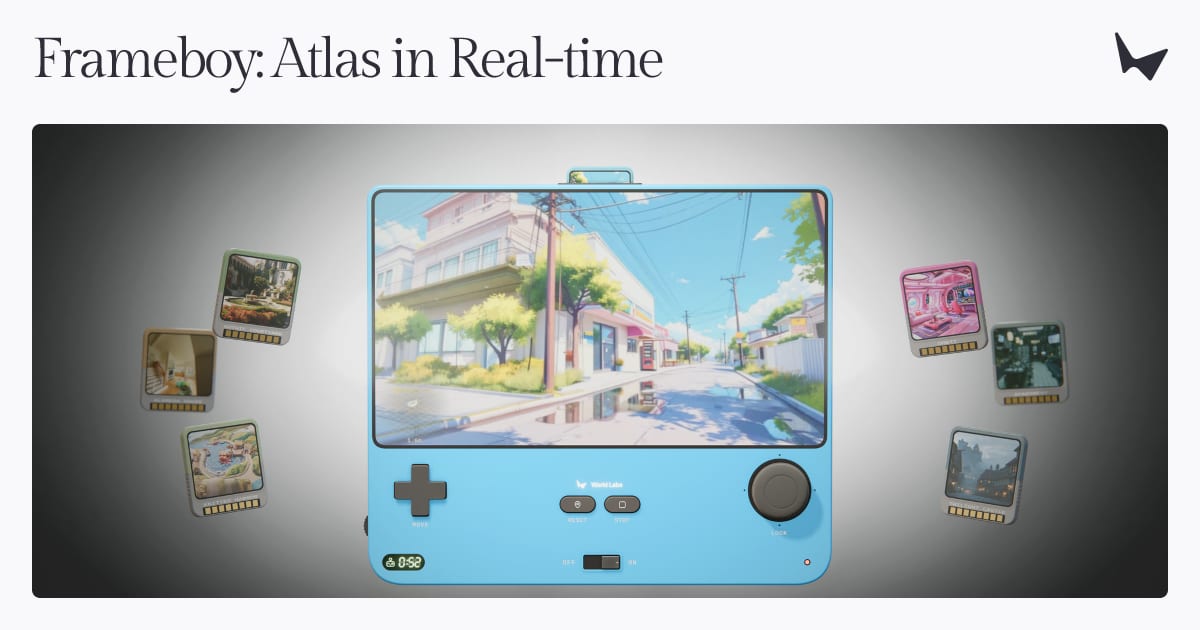
World Labs' Frameboy streams its Atlas world model in real time
World Labs has released Frameboy, a research preview that streams scenes from its Atlas world model to the browser at up to 15fps as you steer the camera.
5 Nov 2026 · World Labs blog

Adobe and KAIST unveil MoviEdit, an AI tool for multi-shot video edits
Adobe Research and KAIST describe MoviEdit, a two-stage AI video editor that keeps edits consistent across scene cuts in clips up to 25 seconds long.
4 Nov 2026 · arXiv paper (2611.02737)
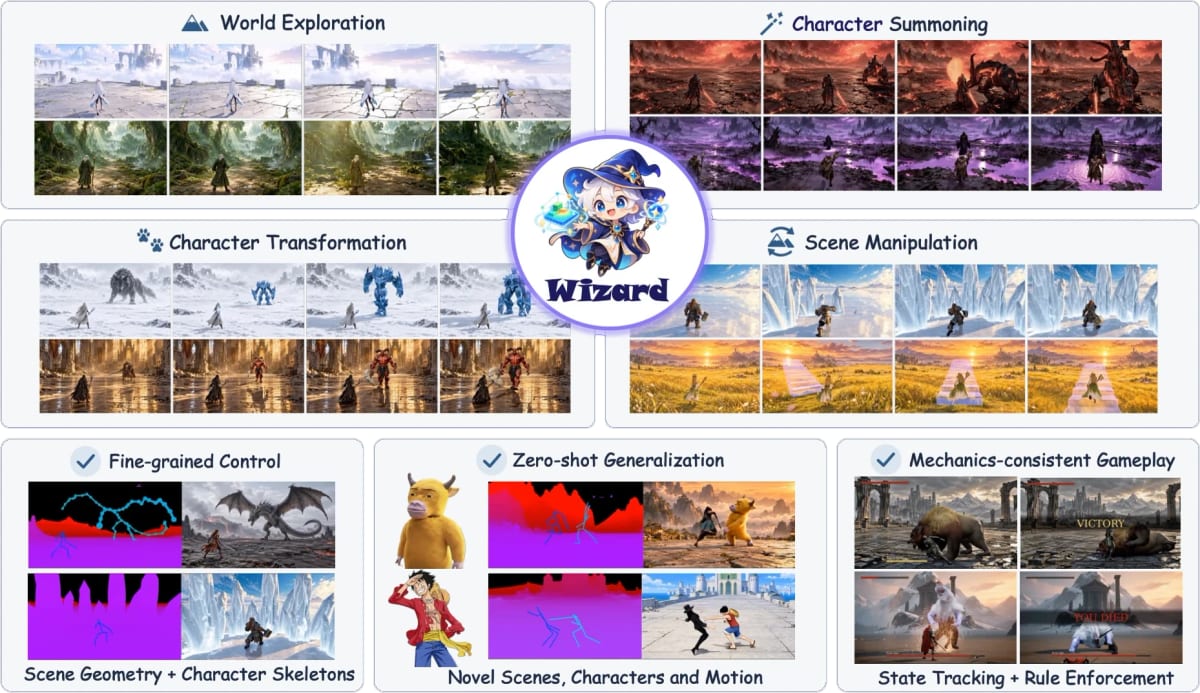
Tencent researchers unveil Wizard, an agentic world model for games
Wizard, from Tencent researchers, lets an agent edit a game world's explicit state and renders the result as real-time video at 24 FPS. Preprint out 29 October 2026.
2 Nov 2026 · arXiv paper (2610.40339)
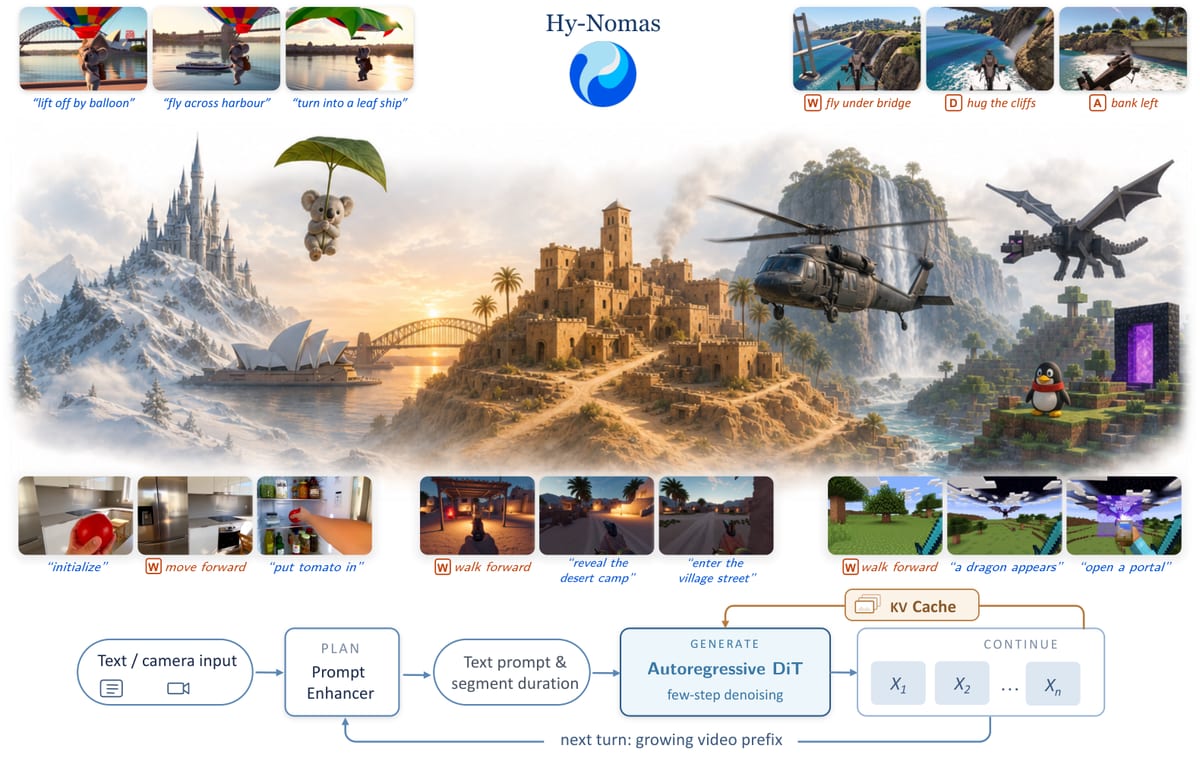
Tencent open-sources Hy-Nomas, an 8B interactive world model
Tencent Hunyuan released Hy-Nomas, an Apache 2.0 video world model steered by text and camera moves across multiple turns, plus a 280-case benchmark.
30 Oct 2026 · Tencent-Hunyuan GitHub repository